
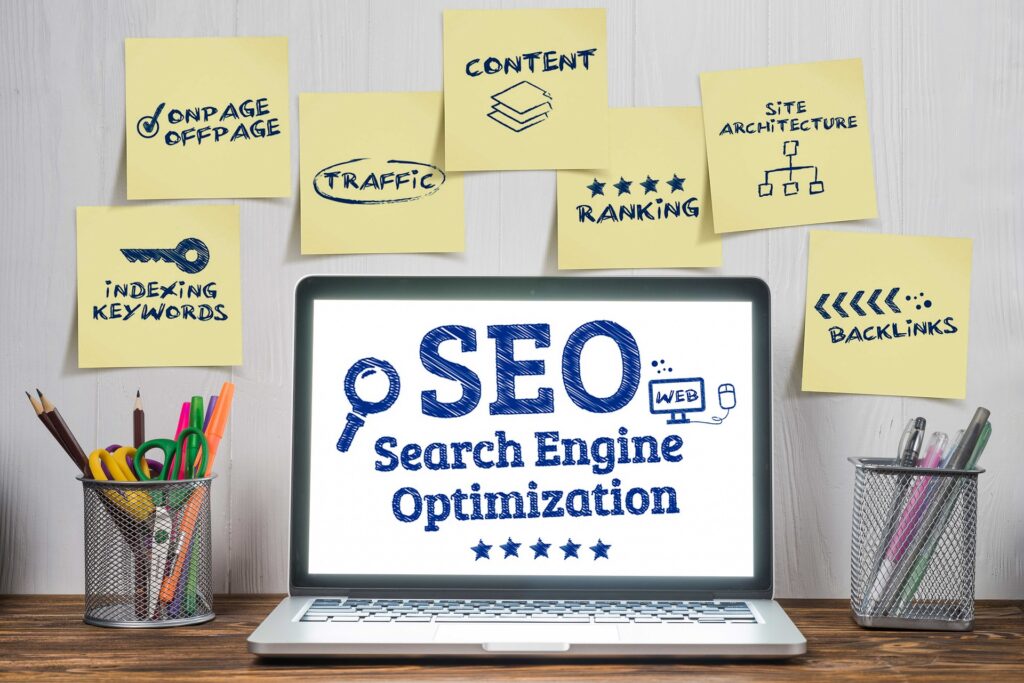
In today’s digital world, businesses and website owners need effective ways to increase their online visibility and attract potential customers. This is where Search Engine Optimization (SEO) plays a crucial role. Understanding what SEO is, its types, and the benefits of search engine optimization can help businesses improve their search engine rankings, drive organic traffic, and build a strong online presence.
SEO is a digital marketing strategy that focuses on optimizing websites to make them more visible on search engines like Google. It involves various techniques and practices designed to improve a website’s performance, user experience, and search rankings. From increasing website traffic and brand awareness to generating quality leads, the benefits of search engine optimization make it an essential part of any successful digital marketing strategy. In this article, we will explore what SEO is, its importance, and the different types of SEO that help websites achieve better visibility and long-term success online.
What is meant by search engine?
A search engine is an online software system designed to help users find information on the internet quickly and efficiently. When a user enters a keyword, phrase, or question into a search engine, it scans its vast database of indexed web pages and displays the most relevant results. Search engines make it easier for people to discover websites, articles, images, videos, products, and other types of online content without having to know the exact web address.
Popular search engines such as Google, Bing, and Yahoo use advanced algorithms to analyze and rank web pages based on factors like relevance, quality, authority, and user experience. These search engines continuously crawl the web using automated programs called bots or spiders, which discover new pages and update existing information. The collected data is then stored in a massive index, allowing search engines to retrieve and display results within seconds.
Search engines play a vital role in our daily lives by helping users find answers to questions, research topics, compare products, locate businesses, and access valuable information. For businesses and website owners, search engines are an important source of organic traffic, making SEO essential for improving online visibility and reaching the right audience. Understanding how search engines work is the first step toward learning SEO and improving a website’s performance in search results.
What is SEO in Digital Marketing?
SEO, or Search Engine Optimization, is the process of improving a website’s visibility in search engine results pages (SERPs) to attract more organic traffic. It involves optimizing various elements of a website, such as content, keywords, meta tags, images, site structure, and page speed, to help search engines understand and rank the website more effectively. Understanding SEO also requires knowledge of search engine basics, including how search engines crawl, index, and rank web pages to deliver relevant results to users.
The primary goal of SEO is to increase a website’s chances of appearing higher in search results when users search for relevant information, products, or services. Search engines like Google use complex algorithms to determine which web pages should appear in search results, and SEO helps websites align with these ranking factors. Some of the key benefits of SEO include increased organic traffic, improved online visibility, better user experience, higher brand credibility, and long-term business growth. By implementing effective SEO strategies, businesses can attract targeted visitors and establish a strong online presence without relying solely on paid advertising.
How many types of SEO are there?
SEO can be broadly classified into three main types: On-Page SEO, Off-Page SEO, and Technical SEO. Each type focuses on a different aspect of website optimization and plays an important role in improving search engine rankings. While On-Page SEO focuses on optimizing content and website elements, Off-Page SEO helps build authority and trust through external signals such as backlinks. Technical SEO ensures that a website is properly structured, fast, secure, and easy for search engines to crawl and index. Understanding these three types of SEO is essential for developing a well-rounded SEO strategy and achieving long-term success in search engine results.
On-Page SEO
On-Page SEO refers to the optimization techniques that are implemented directly on a website to improve its visibility in search engine results. It involves optimizing content, title tags, meta descriptions, headings, images, internal links, and keyword placement. The primary goal of On-Page SEO is to make web pages more relevant and valuable to users while helping search engines understand the content more effectively. Well-optimized pages provide a better user experience and have a greater chance of ranking higher for relevant search queries.
Off-Page SEO
Off-Page SEO includes all activities performed outside a website to improve its authority, credibility, and reputation in the eyes of search engines. One of the most important aspects of Off-Page SEO is link building, which involves acquiring backlinks from reputable websites. Other techniques include social media marketing, guest posting, influencer outreach, and brand mentions. These signals help search engines determine the trustworthiness and popularity of a website, which can positively impact its rankings in search results.
Technical SEO
Technical SEO focuses on optimizing the technical aspects of a website to ensure that search engines can efficiently crawl, index, and understand its content. It includes improving website speed, mobile responsiveness, site architecture, XML sitemaps, HTTPS security, structured data, and fixing crawl errors. Technical SEO plays a crucial role in enhancing user experience and ensuring that a website meets the technical requirements of modern search engines. A technically optimized website is more likely to achieve better rankings and provide a seamless experience for visitors.
Difference Between On-Page SEO, Off-Page SEO, and Technical SEO
| SEO Type | Focus Area | Key Activities | Main Goal |
|---|---|---|---|
| On-Page SEO | Website Content and Page Elements | Keyword optimization, meta tags, headings, internal linking, image optimization | Improve content relevance and user experience |
| Off-Page SEO | External Website Signals | Link building, guest posting, social media promotion, brand mentions | Increase website authority and trust |
| Technical SEO | Website Infrastructure | Site speed optimization, mobile-friendliness, XML sitemaps, HTTPS, crawlability | Help search engines crawl and index the website efficiently |
Note: Each type of SEO serves a unique purpose, but they work together to improve a website’s overall search engine performance. A successful SEO strategy requires a balanced approach that includes content optimization, authority building, and technical improvements.
Importance of SEO in Digital Marketing
- Increases website visibility by helping web pages rank higher in search engine results.
- Drives organic traffic from users actively searching for relevant information, products, or services.
- Improves brand awareness and helps businesses reach a larger online audience.
- Enhances user experience through better website structure, navigation, and content quality.
- Builds credibility and trust, as users often consider top-ranking websites more reliable.
- Supports content marketing efforts by making valuable content easier to discover.
- Generates high-quality leads by targeting users with specific search intent.
- Provides long-term results compared to paid advertising, which stops generating traffic once the budget is exhausted.
- Helps businesses gain a competitive advantage in their industry by improving online visibility.
- Increases conversion opportunities by attracting visitors who are genuinely interested in a business’s offerings.
- Delivers a cost-effective marketing solution with a higher return on investment (ROI) over time.
- Contributes to overall digital marketing success by supporting content, social media, and other online marketing strategies.
Benefits of SEO
- Increases organic traffic by improving a website’s visibility in search engine results.
- Helps businesses reach their target audience without relying solely on paid advertising.
- Improves brand awareness by making a website more discoverable online.
- Enhances user experience through better website structure, navigation, and content quality.
- Builds trust and credibility as higher-ranking websites are often perceived as more reliable.
- Generates high-quality leads from users actively searching for relevant products or services.
- Provides long-term results that can continue to drive traffic and leads over time.
- Offers a cost-effective marketing strategy compared to many traditional advertising methods.
- Improves website performance by encouraging optimization of speed, mobile-friendliness, and usability.
- Increases conversion opportunities by attracting visitors with strong purchase or information intent.
- Helps businesses stay competitive in an increasingly digital marketplace.
- Supports overall digital marketing efforts by strengthening content marketing and online visibility.
- Delivers measurable results through tools such as analytics and search performance reports.
- Creates sustainable growth by continuously attracting organic visitors and potential customers.
SEO helps businesses improve their online visibility and attract targeted visitors. If you want to learn how SEO can support your website growth, you can contact us for more information.
Conclusion
SEO is an essential part of digital marketing that helps websites improve their visibility, attract organic traffic, and reach the right audience. By understanding search engine basics and implementing On-Page, Off-Page, and Technical SEO strategies, businesses can enhance their online presence and achieve long-term growth. Investing in SEO is a smart way to build credibility, increase website traffic, and stay competitive in the digital world.